Fruit & vegetable wholesale software: weigh the loss, see it in ₹, clear it before it's waste
ShelfLifePro is fruit and vegetable wholesale software for India's mandi and cold-room trade: weigh consignments in, see the loss percent per weigh-in, and clear wilting stock hour by hour — before it joins India's 30–40% post-harvest loss.
No credit card required. Cancel anytime.
India loses 30–40% of its fruit and vegetables after harvest. Most of it goes quietly — a few percent of weight a day.
Leafy greens can shed around 2% of their weight per day even in good cold storage, herbs more, onions and potatoes far less. Every lost kilogram was bought and paid for. Weigh-ins per consignment make the loss visible while the stock can still be sold.
Every claim on this page is a screenshot, not a promise
Live product, real demo data — this is what your trade looks like in ShelfLifePro.
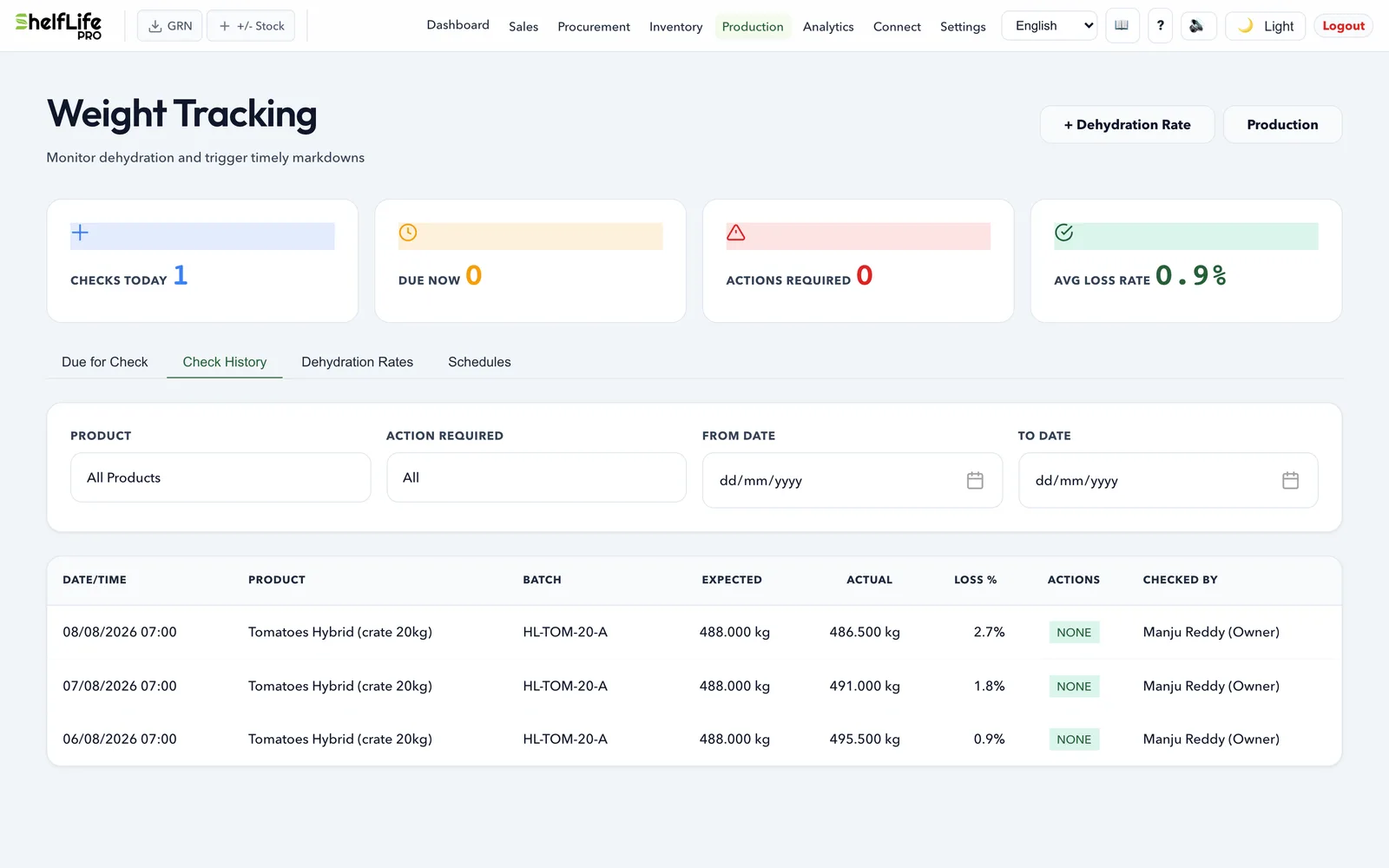
Expected vs actual, kilogram by kilogram
Every consignment gets weighed in: nominal kilograms against actual on the scale, loss percent per check, who checked and when. The 2.7% you can see beats the 10% you find out about at stocktake.
- Expected vs actual kg per weigh-in — 488.0 expected, 486.5 on the scale, 2.7% gone
- Loss percent per consignment, not a year-end average
- Average loss rate for the whole operation on one tile
- Dehydration-rate reference by category, editable to your reality
The oldest crate leaves first
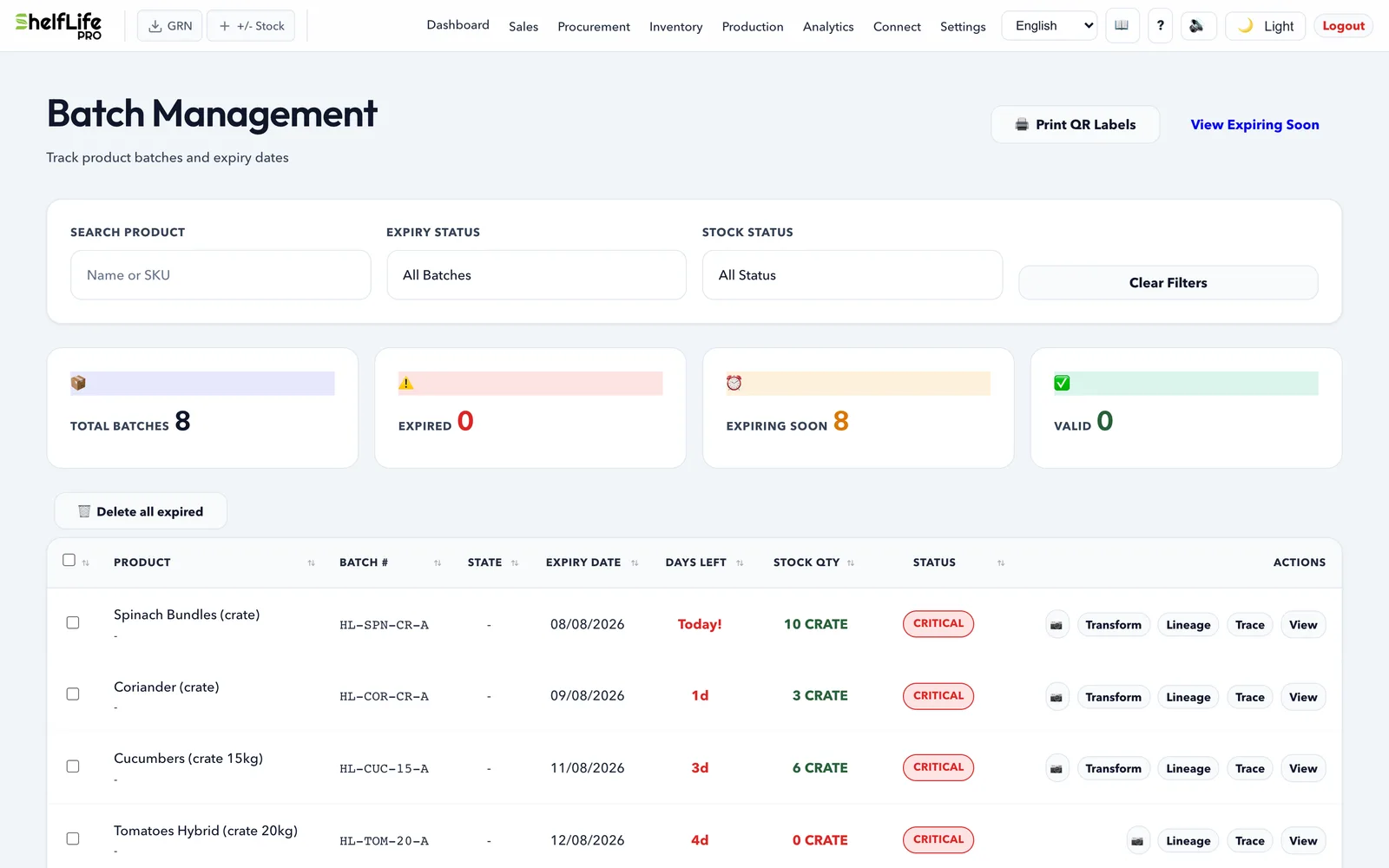
Each harvest is its own batch with its own countdown, sorted oldest-first — spinach flagged Today!, coriander tomorrow. First-Expire-First-Out stops fresh stock leaving while older stock dies at the back of the cold room.
- Every crate a batch, with a days-left countdown
- Same-evening greens flagged Today! at the top of the board
- Oldest-first ordering is the default — FEFO without thinking about it
- Transform, lineage and trace actions on every batch
A price ladder that moves as fast as spinach wilts
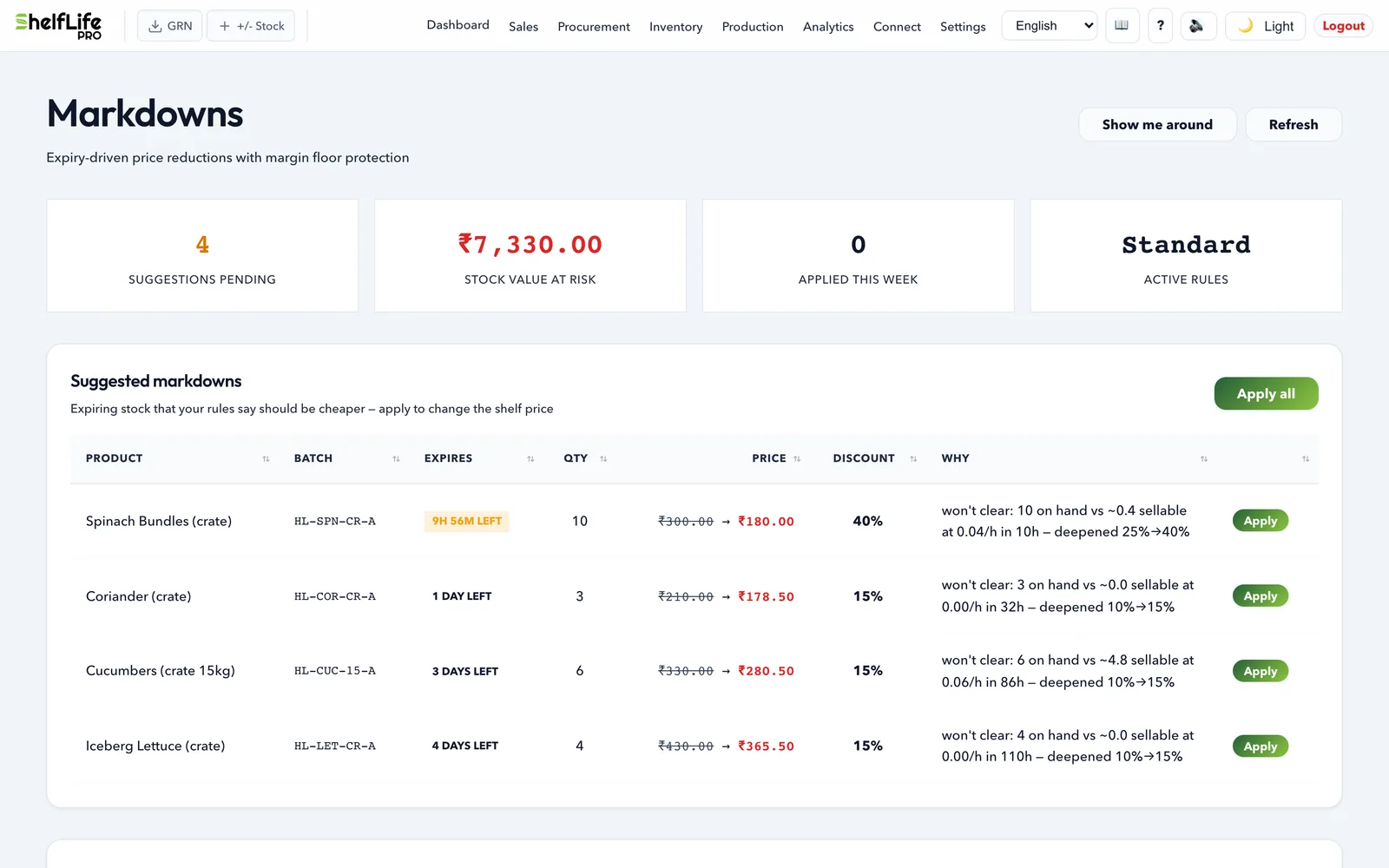
The markdown board reads runway in hours — 9H 56M LEFT — and deepens the discount as the hours shrink, with the sell-through math shown for every suggestion.
- Hour-level runway on wilting stock
- Suggestions deepen automatically — 25% becomes 40% as the evening closes in
- The why is shown: crates on hand vs what will actually sell at current speed
- Margin floor protection built into the rules
Expiry tiers and today's clearance work, on one screen
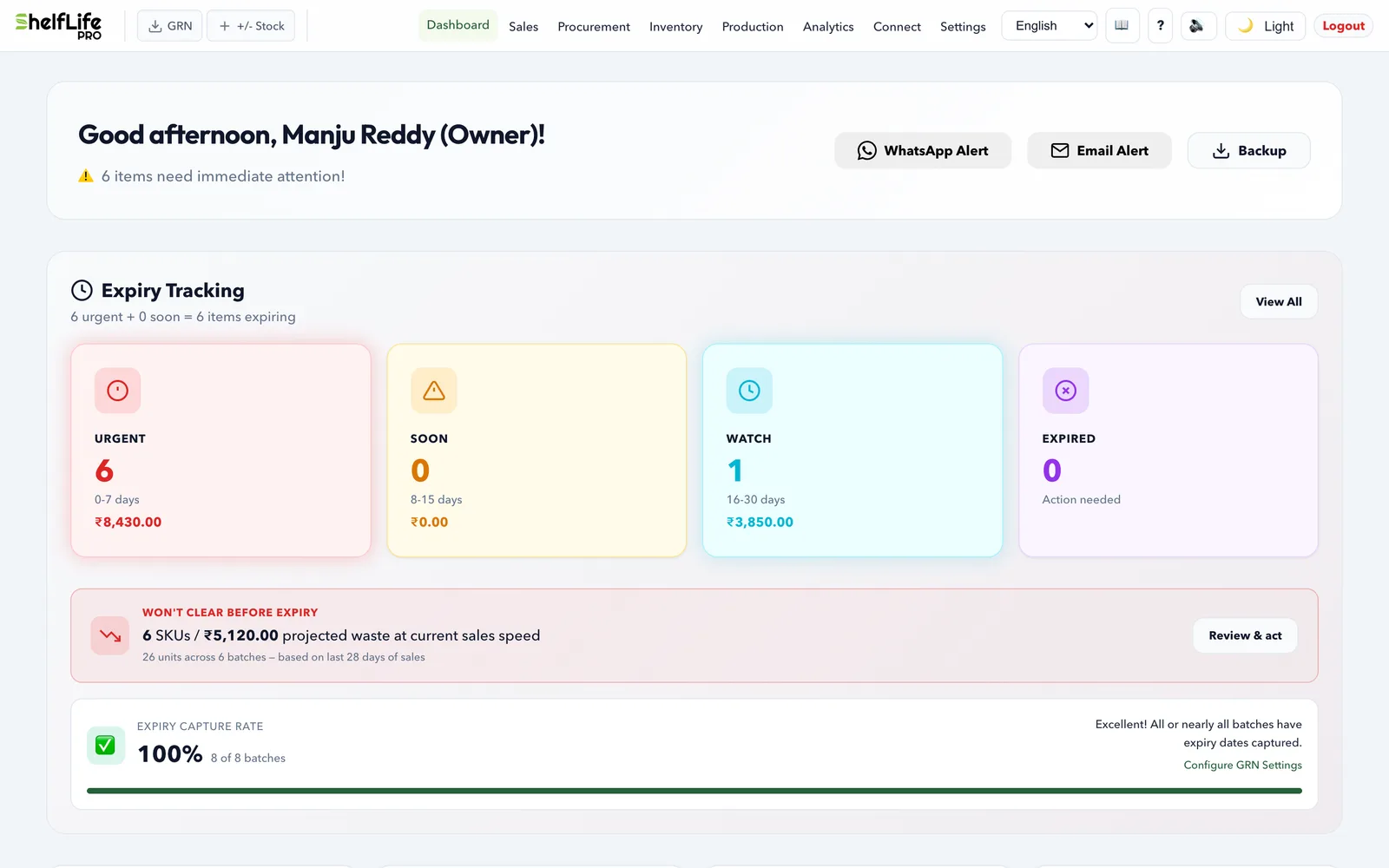
Urgent, soon and watch tiers with the ₹ value in each, and a projected-waste band that names what won't clear at current sales speed — before it becomes waste.
- Expiry tiers with the value at stake in each
- Projected waste called out in ₹, while it can still be cleared
- WhatsApp and email alerts for the morning round
- Expiry capture rate shows how much of your stock is actually under tracking
Built for the way the mandi actually trades
Kilograms to crates to pallets, cold room to reefer, B2B invoices for hotels, kirana chains and caterers — with credit per customer. Wholesale-first: this is invoice trade, not a retail checkout.
The records a produce business is asked for
Weight at receipt, cold room and reefer temperature logs, lot-level records, and a recall that reaches every customer on the list.
Weight recorded at receipt
Catch-weight receiving writes the actual kilograms to the batch, so shrink is measured against what arrived, not what was ordered.
Your FSSAI number on every bill
The 14-digit licence or registration number prints on every invoice and receipt, as required since 1 October 2021. A branch licence in the register prints on that branch’s bills.
Temperature log for chilled and frozen stock
Readings by zone against target bands, breaches flagged, and anything chilled sitting in an ambient store called out. Exportable to CSV. "Shelf life lost" after an excursion is an estimate.
Licence register with renewal reminders
FSSAI licence or registration, GST and trade licences in one register, each with its own reminder lead time. We remind you; we do not renew it for you.
A recall, run by the regulation
Record the lot and it is blocked at every counter, transfer and delivery at once. The distribution list builds from your records, the 24-hour authority-notice clock starts, weekly status reports fall due, and the packet is prepared for you to submit. It is not itself a submission.
Expired stock cannot be billed
Not a warning, a refusal, on every plan. The counter offers the earliest-expiring batch first; overriding it carries a reason that stays on record.
Batch trace in one click
One PDF from the supplier invoice backward to every sale, transfer, issue, donation and return forward. The Food Recall Regulations require these records for a year past expiry.
The recall workflow is on Pro Growth and above; the licence register and the refusal to bill expired stock are on every plan. The figures behind this year’s inspections, with sources: India food safety numbers 2026.
Questions produce traders ask
Straight answers about weight, FEFO and the mandi trade.
What is post-harvest weight loss tracking?
It is the practice of weighing produce consignments after receipt and comparing actual kilograms against expected, so dehydration loss is measured instead of guessed. ShelfLifePro records each weigh-in per batch, shows the loss percent, and uses it to decide when stock should be cleared.
How much weight does produce actually lose per day?
It varies by category: leafy greens can shed around 2% of their weight per day even in good cold storage, herbs more, onions and potatoes far less. Under a warm shed, rates multiply. That spread is exactly why per-consignment weigh-ins beat one flat spoilage assumption.
How does FEFO work for fresh produce?
First-Expire-First-Out means the oldest harvest of a crop is issued and sold first. ShelfLifePro keeps each harvest as its own batch with its own countdown, sorted oldest-first, so the crates that die tonight are the crates the market sees first.
Can it handle mandi-style trading — crates, pallets and kilograms?
Yes. Kg-to-crate-to-pallet conversions are built in, weight-based stock is weighed in at receiving — nominal against actual, recorded on the batch — and loss is tracked in kilograms per consignment.
Do you support B2B billing for hotels, kirana chains and caterers?
Yes — wholesale invoicing with per-customer pricing and credit is the selling side of the product for this trade. This page describes the wholesale product: invoices for business buyers, not a retail POS.
What happens when stock will not sell before it wilts?
The clearance board projects, per batch, how much will not clear at the current sales speed — down to hours for same-evening greens — and suggests a price ladder that deepens as the runway shrinks, so stock moves at a discount instead of dying at full price.
Useful even if you never sign up
Free, instant, and built from the same rules the product enforces. Take it with you.
Get the department date-check logs
Printable daily date-check logs for produce, dairy, meat and deli — the department discipline printed on each page, plus a fillable Excel version. See what's inside.
Instant download. No spam, unsubscribe in one click.
Free 60-second inventory audit
Upload a stock export (CSV or Excel) and see the value at risk in your inventory — no signup.
Weigh one consignment in and watch the loss become visible
Set up in a day. Start with your fastest-dying category and let the board earn its keep by Friday.