Catering & kitchen inventory, from storeroom to service
Track stock the way a kitchen actually runs: receive into the storeroom, issue to the kitchen, rotate by expiry, and account for every gram. Food-cost control and a clean audit trail, without bolting on a retail POS.
No credit card required. Cancel anytime.
The back of house is where food cost leaks
Storeroom, pantry, and kitchen drift apart, and the gap shows up as cost, not a missing sale.
No line of sight from storeroom to kitchen
Stock arrives, gets walked to a pantry, then to a kitchen, and the paperwork never keeps up. By service you are guessing what you actually have on hand.
Issued is not the same as sold
Caterers commit stock to functions, not to a till. Without an issue-to-kitchen record, you cannot tie consumption to a function or see where food cost really goes.
Rotation and traceability run on memory
"Use the oldest first" works until a busy week. Without enforced FEFO and an immutable log, short-dated stock expires in the back and audits become a scramble.
Inventory that speaks kitchen, not retail
Receive, issue, rotate, and account, with the traceability food safety expects.
One view from storeroom to pantry to kitchen
See live levels across the central store and every kitchen. Transfer between them with full batch tracking, so the location holding each item is never in doubt.
- Storeroom, pantry, and kitchen stock in one place
- Inter-location transfers with batch + expiry carried over
- Receive against suppliers with batch and expiry capture
- Par-level visibility so you reorder before you run short
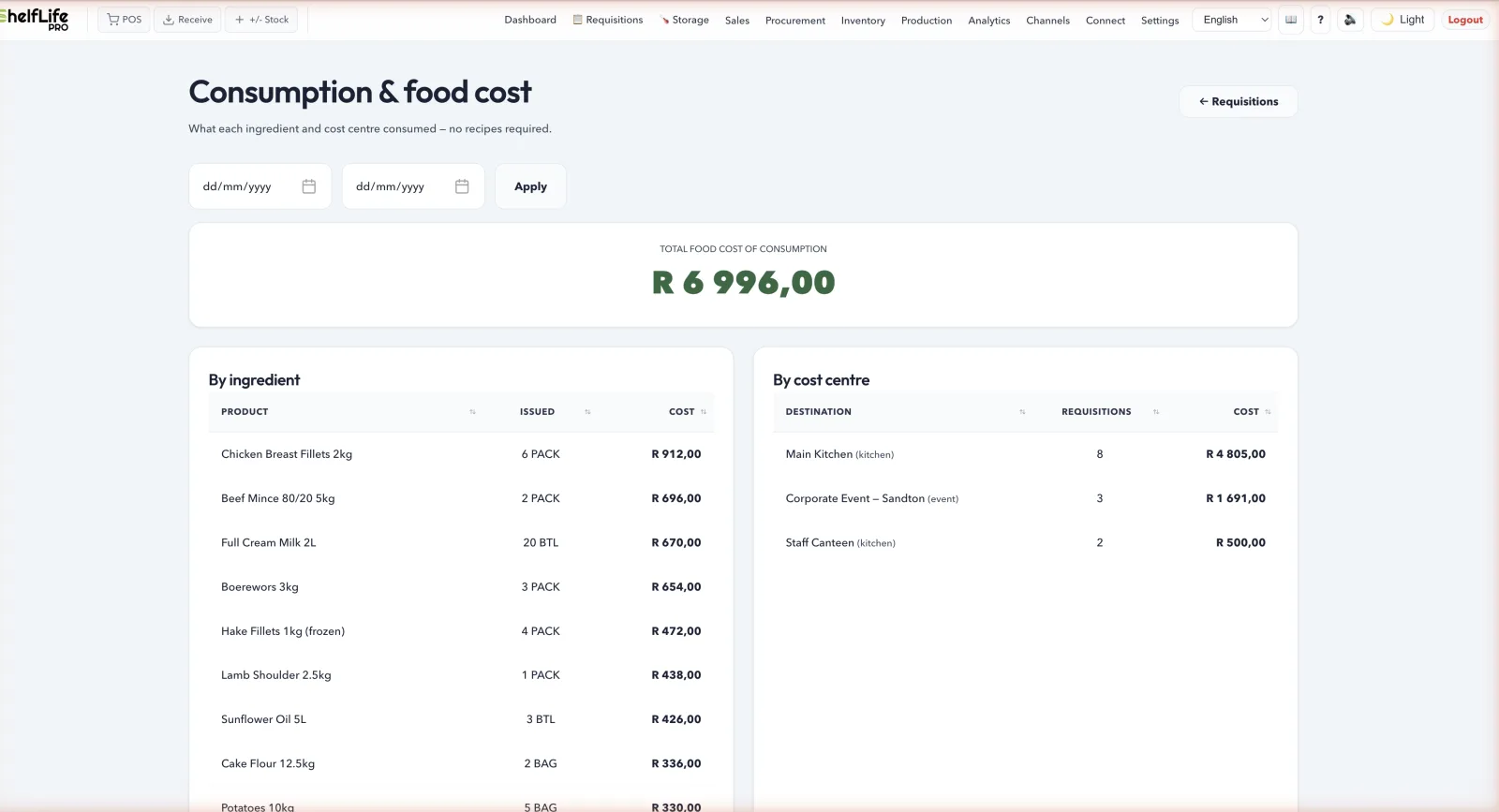
Track consumption the food-service way
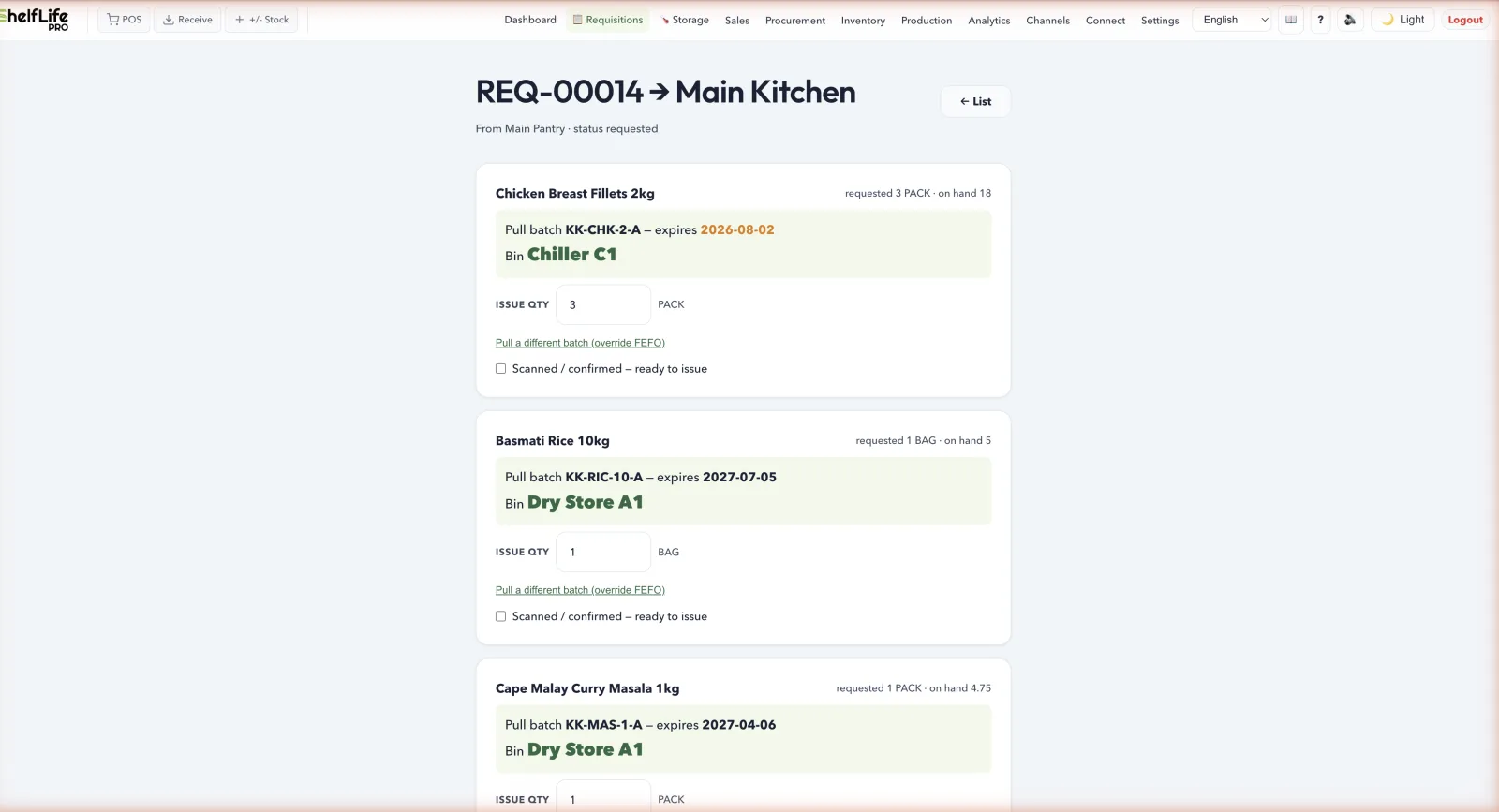
Issue stock to a kitchen or a function instead of selling it. Each issue depletes the storeroom and builds the record you need to see food cost per function, not just a stock count.
- Issue-to-kitchen and issue-to-function records
- Consumption tied to cost centres, not a till
- Wastage and spoilage logged distinctly from issues
- Food-cost reporting from real movements
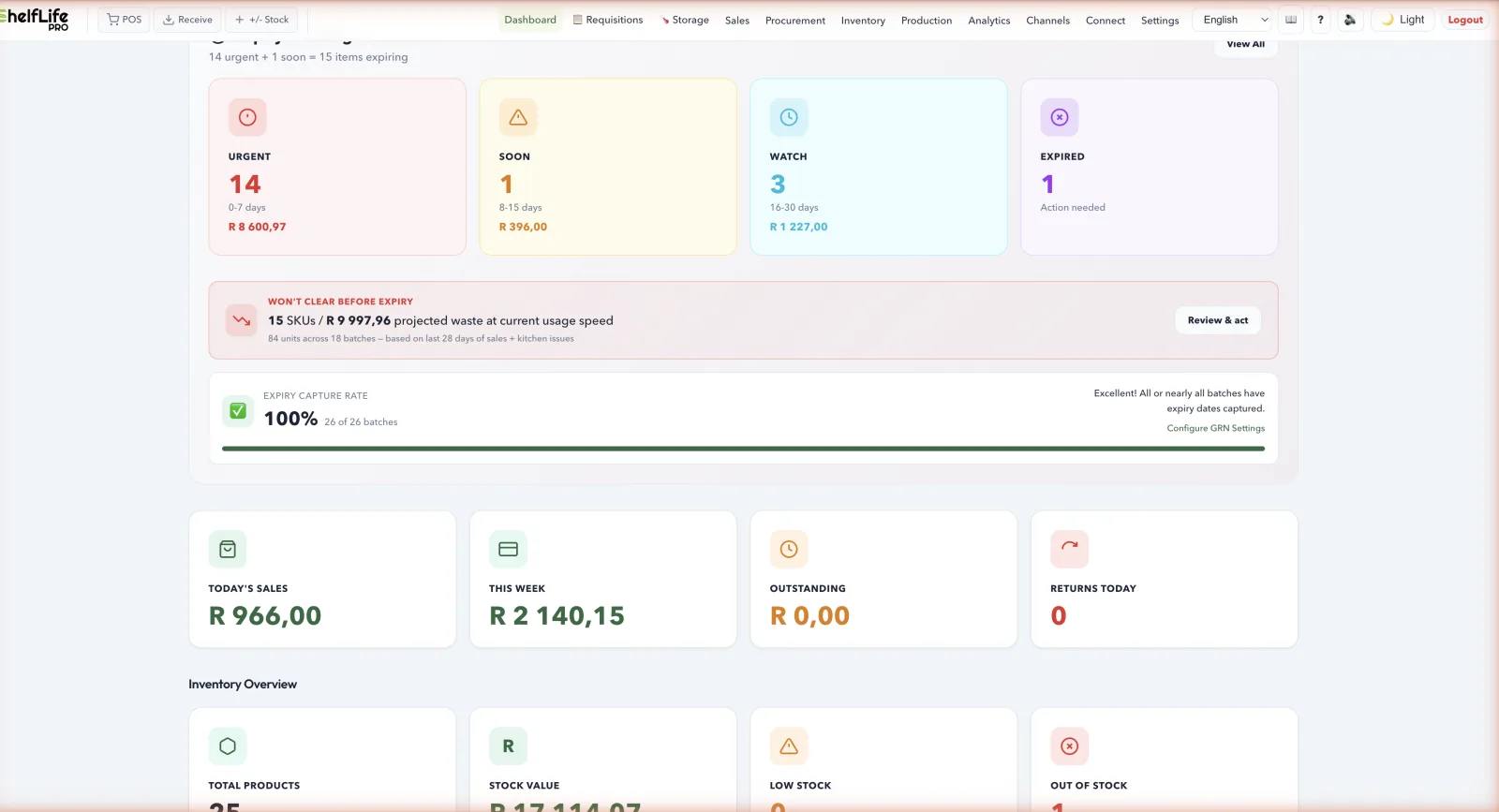
Rotate by expiry, prove it later
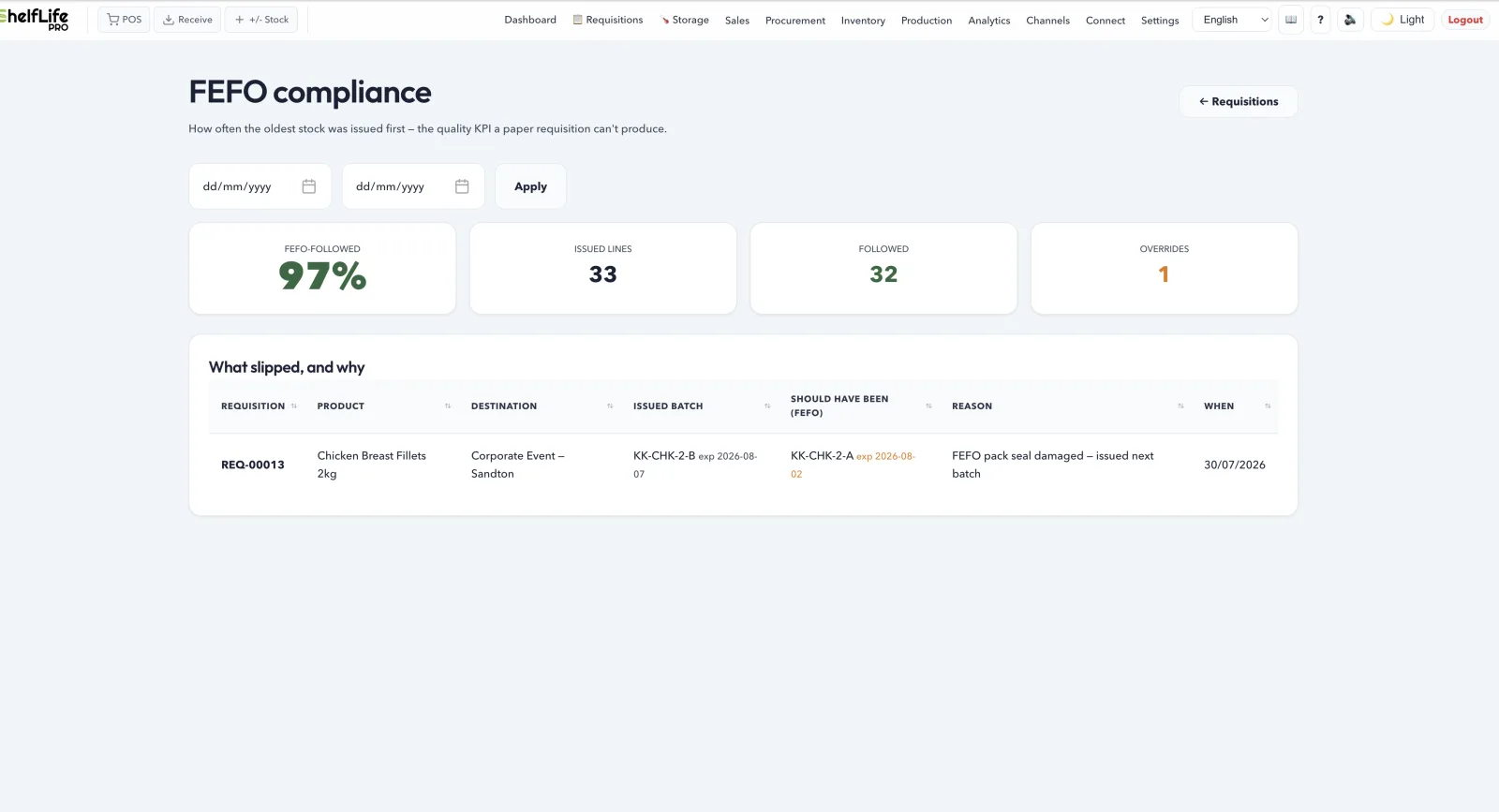
FEFO surfaces the oldest batch first at issue time, and every movement is written to an immutable log, corrections are adjustments, never silent edits. Use oldest first, move it before it expires, and have the record to show for it.
- FEFO enforced when stock is issued
- Short-dated items flagged before they expire
- Immutable batch-level audit trail
- Receipt, issue, transfer, and write-off all timestamped
The records an inspector asks for in a kitchen
One licence register for every kitchen, expired stock that cannot be issued, storage zones with a temperature log, and a recall that reaches every indent.
Your FSSAI number on every bill
The 14-digit licence or registration number prints on every invoice and receipt, as required since 1 October 2021. A branch licence in the register prints on that branch’s bills.
Licence register with renewal reminders
FSSAI licence or registration, GST and trade licences in one register, each with its own reminder lead time. We remind you; we do not renew it for you.
Expired stock cannot be issued
An indent is issued from the earliest-expiring batch; an expired batch is not offered. Overriding the pick needs a reason, and the reason is kept for the FEFO compliance report.
A recall, run by the regulation
Record the lot and it is blocked at every counter, kitchen indent and transfer at once. The distribution list builds from your records, the 24-hour authority-notice clock starts, weekly status reports fall due, and the packet is prepared for you to submit. It is not itself a submission.
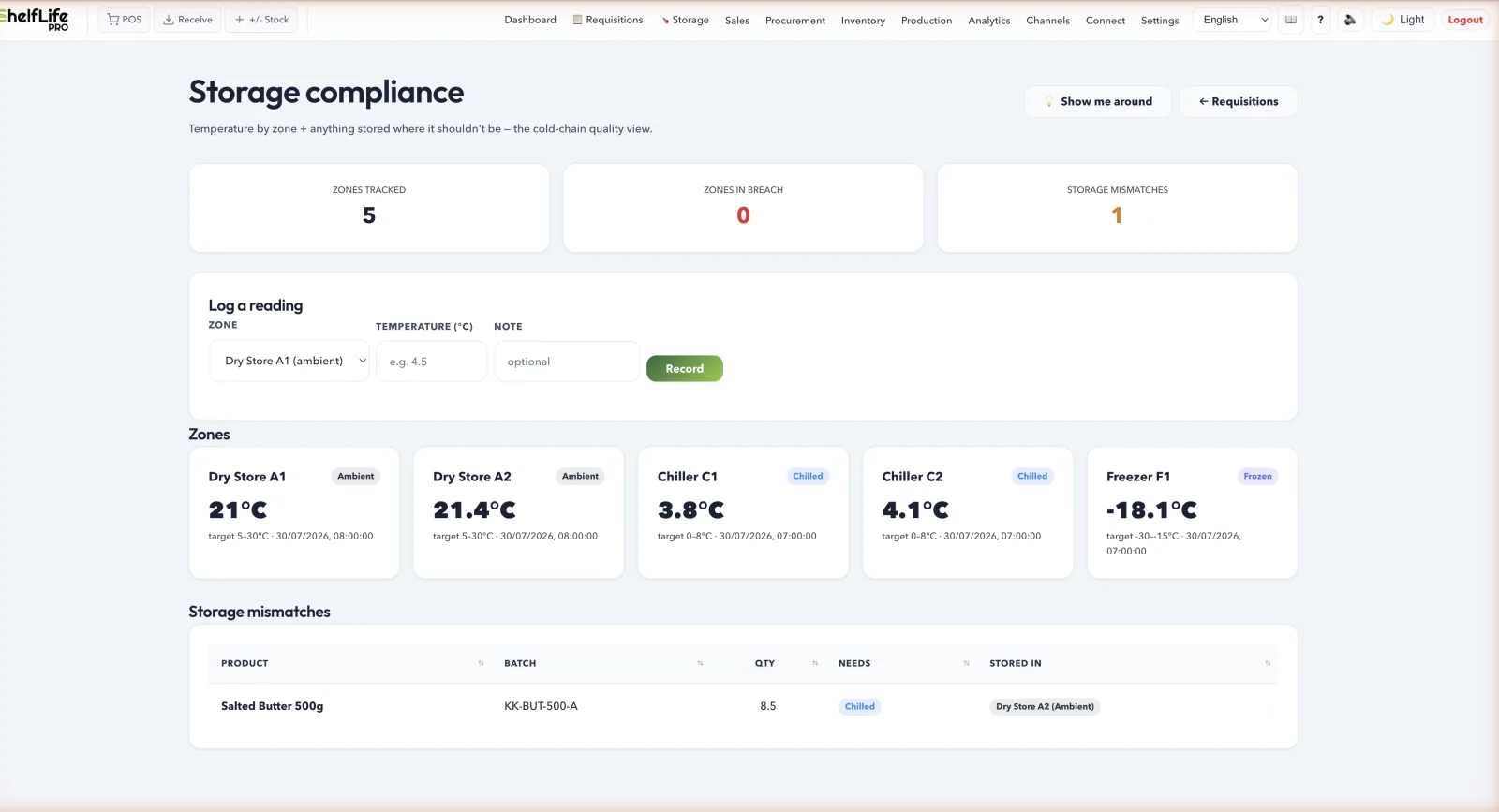
Temperature log for chilled and frozen stock
Readings by zone against target bands, breaches flagged, and anything chilled sitting in an ambient store called out. Exportable to CSV. "Shelf life lost" after an excursion is an estimate.
Batch trace in one click
One PDF from the supplier invoice backward to every sale, transfer, issue, donation and return forward. The Food Recall Regulations require these records for a year past expiry.
The recall workflow is on Pro Growth and above; the licence register and the refusal to bill expired stock are on every plan. The figures behind this year’s inspections, with sources: India food safety numbers 2026.
The rest of the kitchen, in product
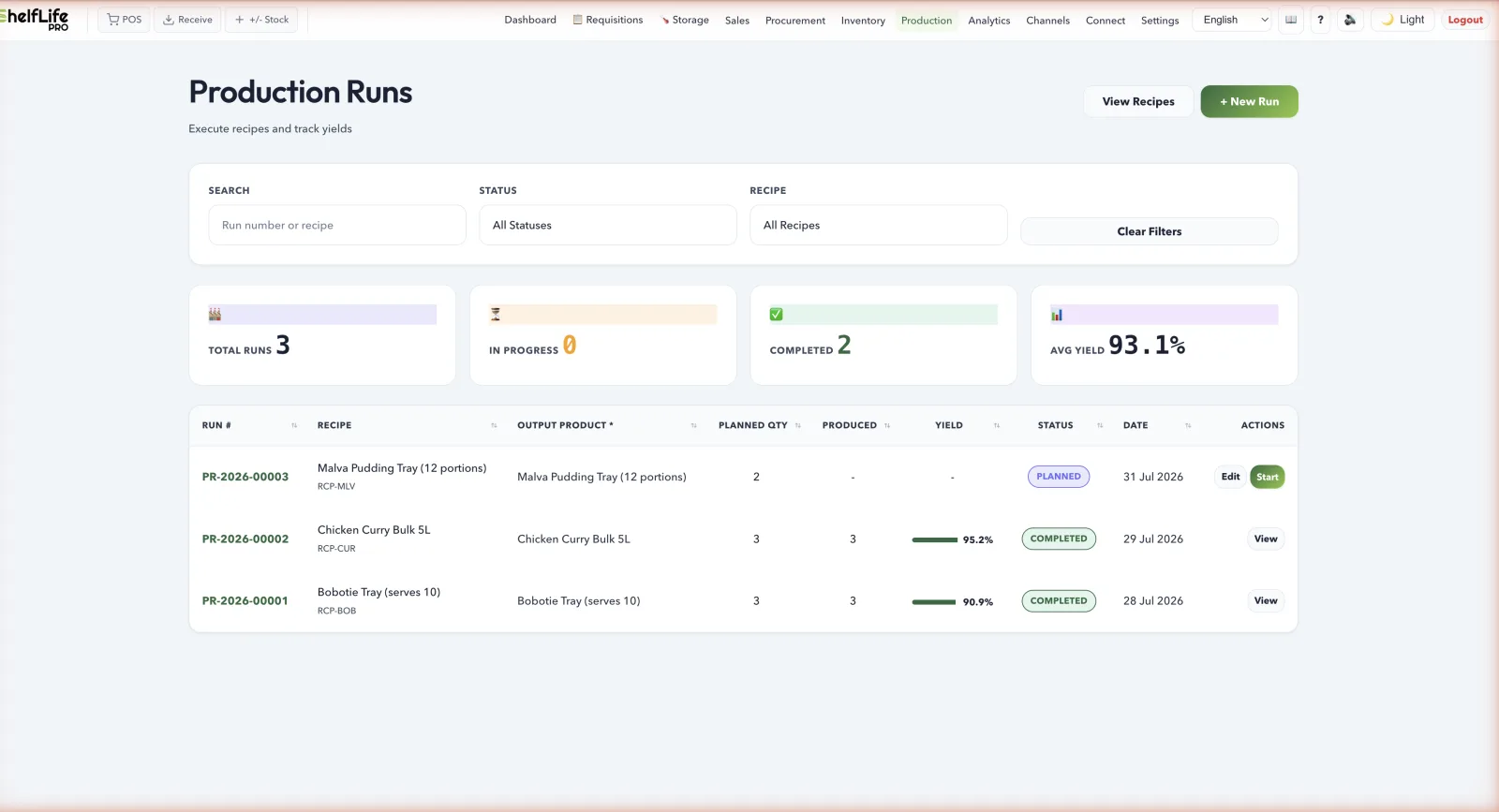
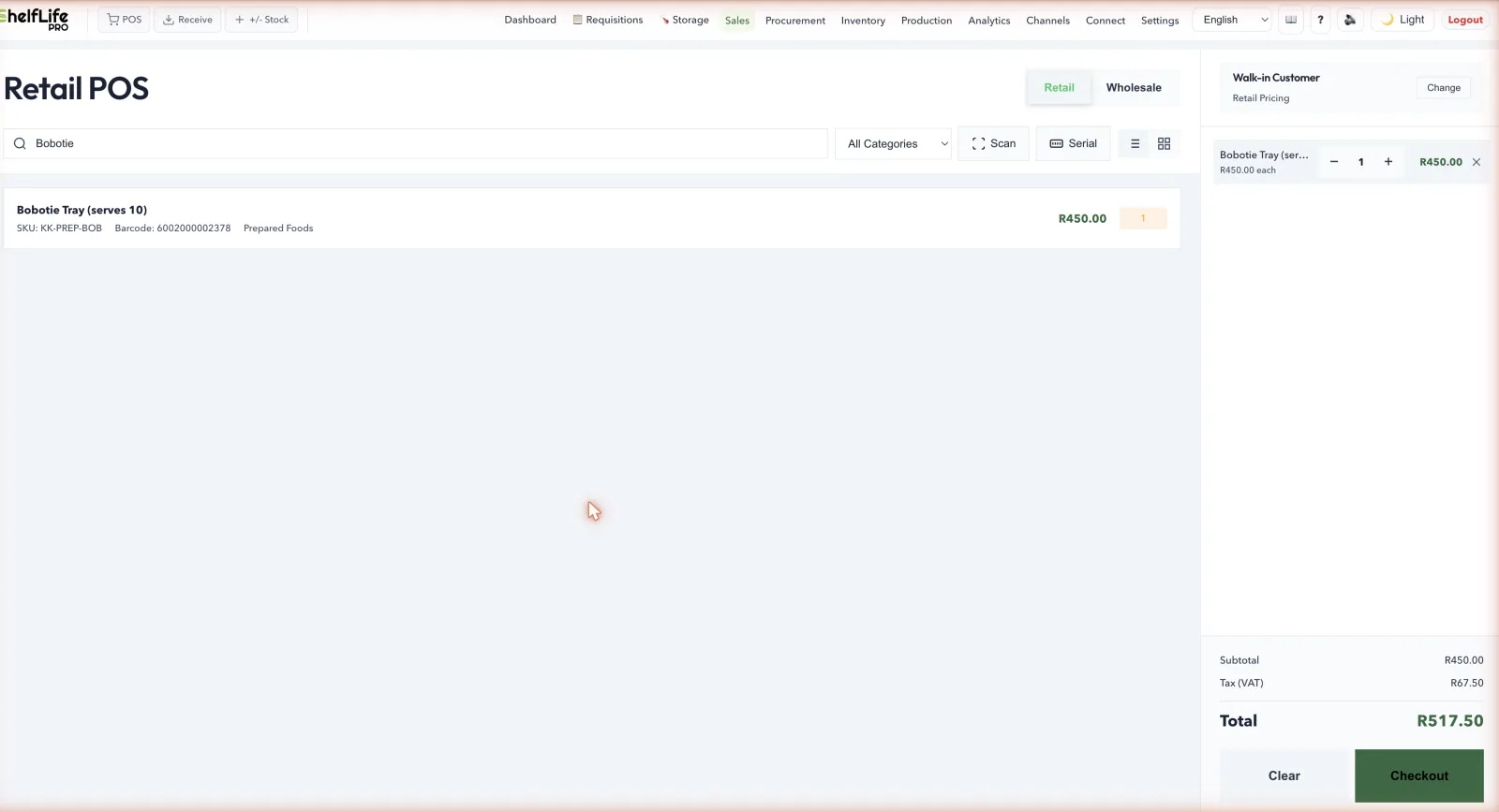
Real screens from a working catering tenant — compliance you can show an auditor, production you can cost, and a counter that speaks your tax language.
Useful even if you never sign up
Free, instant, and built from the same rules the product enforces. Take it with you.
Get the 2-page FEFO cheatsheet
The first-expired-first-out rulebook, the 30/15/7-day alert ladder, and the weekly checklist — print it and stick it on the store-room door. See what's inside.
Instant download. No spam, unsubscribe in one click.
Take control of food cost from the storeroom out
Start a free 14-day trial. Set up your stores and kitchens in an afternoon.
Questions from catering & food-service teams
How kitchen inventory differs from retail, and what the audit trail covers.